Interview Tips For Government Jobs in Pakistan
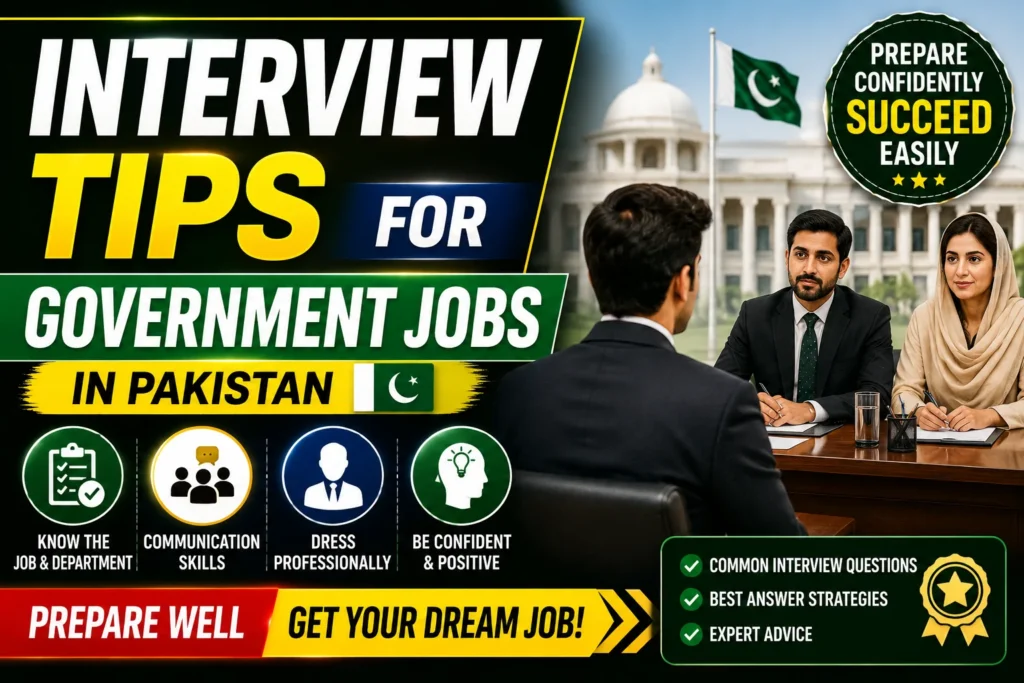
Interview Tips For Government Jobs. The Written Portion of a Government Exam and 7 Expert Tips To Succeed with Your Government Job Interview. Although clearing the written portion for a government job can seem like a significant feat, it’s only half of the Battle for your Dream government Post.
Interviews are what truly determine who makes it from the group on the shortlisted list. From the outside looking in, interviews seem totally overwhelming and much harder to prepare for than multiple choice or essay-based exams-you don’t have a readily available list of topics to study from or past questions to answer, as it is your personal qualities that are being vetted. Thankfully, government interviews do tend to adhere to some structures that you do not only prepare but excel for!
We discuss what you should expect from interviews, what you can expect to be asked, how to study best for a government job interview, and what the most successful government candidates have as Habits.
Interview Tips For Government Jobs
Understanding the Government Interview Format
PPSC (Punjab Public Service Commission) or FPSC Its a group of 3 to 5 examiners for most of the Government Jobs In Pakistan Whether you’re interviewed by PPSC, FPSC or the department concerned, it’s more likely to be an examination board, not an individual person in charge. Most of the examination board consist of subjects specialists relevant to the post and some of the senior officers belonging to the department or the commission as members. Duration of Examination board meeting typically range from10 to 20 minutes, depending on the post as well as how much candidates were interviewed on that particular day.
- Type of Question Asked in Govt Job Interview: In Pakistan-Education/ Qualification related questions(Subjects related to the post).
- Technical/Professional related questions (Job specification);– General knowledge / current events questions (Islamiat, Pakistan affairs, every day science)
- Situational/ behavioral Questions ( how to handle situations) ;The board of examination sometime also ask regarding your knowledge about the Department and position you have apply to and why you are interested in job in that organization.
Step 1: Research the Department and Post Thoroughly
A classic gap in the way candidates prepared themselves – you don’t know very much about the actual department you are interviewing with besides it’s title. Prepare for yourself for the interview. Learn what that department actually does, any recent activities/projects they did (if anything’s on the news), and the relation between this position and its purpose/position. Briefly describing things about the place shows if it is a serious application.
Step 2: Review Your Own Application and CV Closely
Often panels will quiz you directly based on material from your own curriculum vita/application form be that your degree class, prior experience you included, projects you described, etc. Look over your resume in advance, if they ask you something out of everything on it prior to being unable to explain it in an interview; then you know how that going to seem. (And really should avoid all circumstances of this having an occurring.)
Step 3: Subject-Specific Questions Preparation
If the posts are for a technical or subject-area role you should anticipate the panel probing you on understanding a few basic principles around the topic you cover and not just on reciting a definition from a text book. You may need to pull out some old degree course work and revisit a number of principles particularly those relevant to the post function, and if you have time a couple of days studying up specifically for interview on the core subjects.
Step 4: Stay Current on General Knowledge and Current Affairs
Government interviews ask questions concerning both national & international news, policies & common knowledge subjects similar to a written exam except that they might go into a bit deeper conversation on those topics. Catch up on the news in the weeks preceding your interview, & don’t just remember “the facts”. Remember to converse about them if those topics arise.
Step 5: Interviewer Questions
- There is no right or wrong answer in this aspect, however, it pays to provide a particular, systematic answer instead of those vague and generic ones.
Two to three real-life examples (academic or professional and indeed any life situations you can refer back to any potential question to form basis as reference as either one responsibility, problem solving, or teamwork skill should prepare before hand.
Step 6: Speak Your Answers Out Loud
The ability to hold the question in your mind is entirely different to communicate the answer clearly to another human while simultaneously holding your breath.
Take your opportunity to rehearse out the questions you feel that the interviewer is going to use against you out-loud with a friend or family member who may either hold the post, do the asking with no feedback or alternatively sit there with some sort of stick and prod the back of your leg for being too boring! It honestly works when interviewers turn up.
Step 7: Etiquette and Presentations
You’re unlikely to encounter very informal government interviewers in Pakistan, and appearance is a factor.
Your best bet: dress professionally, conservatively (a suit is best for men in any field, for women you will look professional in a professional suit or a more conservative version for other roles) and arrive early, greets the committee as professionally as possible.
These simple good habits: proper eye contact, good posture, listening patiently to a question in its entirety are a big part of the impression you make (sometimes more than the answers you provide!).
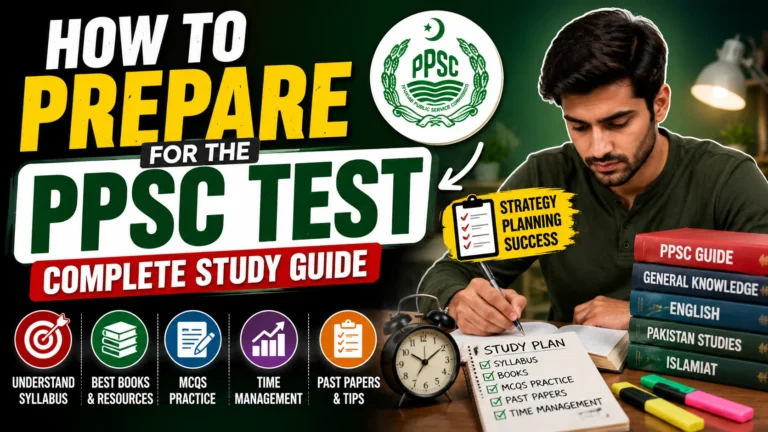
Also Check: How to Prepare for the PPSC Test – Complete Study Guide
What to Bring With You
Carry one additional copy of your documents despite already having them, as interview panels occasionally request to see the original document(s) or the photocopy of the same in the interview panel. Keep them safe, accessible and manageable; just take along an additional fold with the most relevant of you CNIC, domicile certificates, and relevant experience letter.
Common Mistakes
- One example, it’s common that some people learn one rehearsed answers so hard it might be hard to get rid of reading them as if the page were copied as a textbook.
- Practice and prepare it so that you don’t rely on it word for word most of panel questions are more receptive to answers that sound natural rather than a recited poem.
- Avoid answering a question incorrectly due to nervousness under a little pressure this does happen.
- In this instance it’s worth taking a moment to ‘think’ and even ‘not know’:
- it’s completely fine to simply be honest and, if they are open to this, to talk through what steps would be involved to ascertain the correct information.
- Even very good candidates often forget to prepare very obvious, and therefore very easy, questions to do with their own experience and their cv and education, since these are, or at least should be, the questions with readily available preparation material to draw on for an answer.
Handling Nervousness on the Day
This government interview is stressful because these positions require so many different qualifications.
There are a couple of small but effective things you can do about these nervous and often pesky interview nerves: before going into the day before get plenty of rest instead of cramming that material, be on time and walk in just slow enough so that you’re not hurried before walking into the room; relax to take some small breaths just before they begin to go up you, when asked with a certain question and it totally throws me off it’s OK to just take time before I rush myself into answering any and give me enough time to take a few moments before I proceed to an out of the answer the government position can be really nerve-wracking for quite a many candidates as you go into the interview and if one would also like a to try, the key here are to try and some habits.
Final Thoughts
- To Pakistan Government Sector In Interviews: candidates who are adequately prepared, possessing superior communication, and confident in their experiences and for the job profile, are viewed favorably by the Pakistan Government job interview committee.
- There is no magic, all-encompassing formula for this; the panel seeks to understand your thought process and how you convey your understanding rather than how many bullet points you can tick off a study sheet.
- Preparing the departmental study, checking your personal application, verbally responding to sample questions and appearing well turned out may feel a lot more effort than many others invest post-written test; however, will significantly ready you more than the average competitor.
Frequently Asked Questions
After how much duration I get the call for Pakistan Government job interview?
Most interviews in government jobs in Pakistan are 10–20 minutes long but this might change based on the post that is to be interviewed, and the number of candidates to be interviewed on a certain day.
What should I wear in a government job interview?
Both males and females should consider wearing conservative professional outfits, formal dressing is the norm for any government interview process.
What to do if I do not know answers to the question in interview?
Just accept if you don’t know the answer and maybe tell them how you would find the answer on your job if given a chance. It is better not to lie or make a guess as interview panels catch those easily.
Should I learn programmed answers for the interview?
You can learn points about the role and the organizations, you do not want to sound robotic. Stick to what you’ve to say in points to make a better impression rather than memorize it word by word.
Which documents must be carried in government job interview?
In government job interviews in Pakistan carry a copy of your CNIC, domicile certificate, educational documents along with experience letters if mentioned earlier, even if you’ve submitted them initially with the application.